
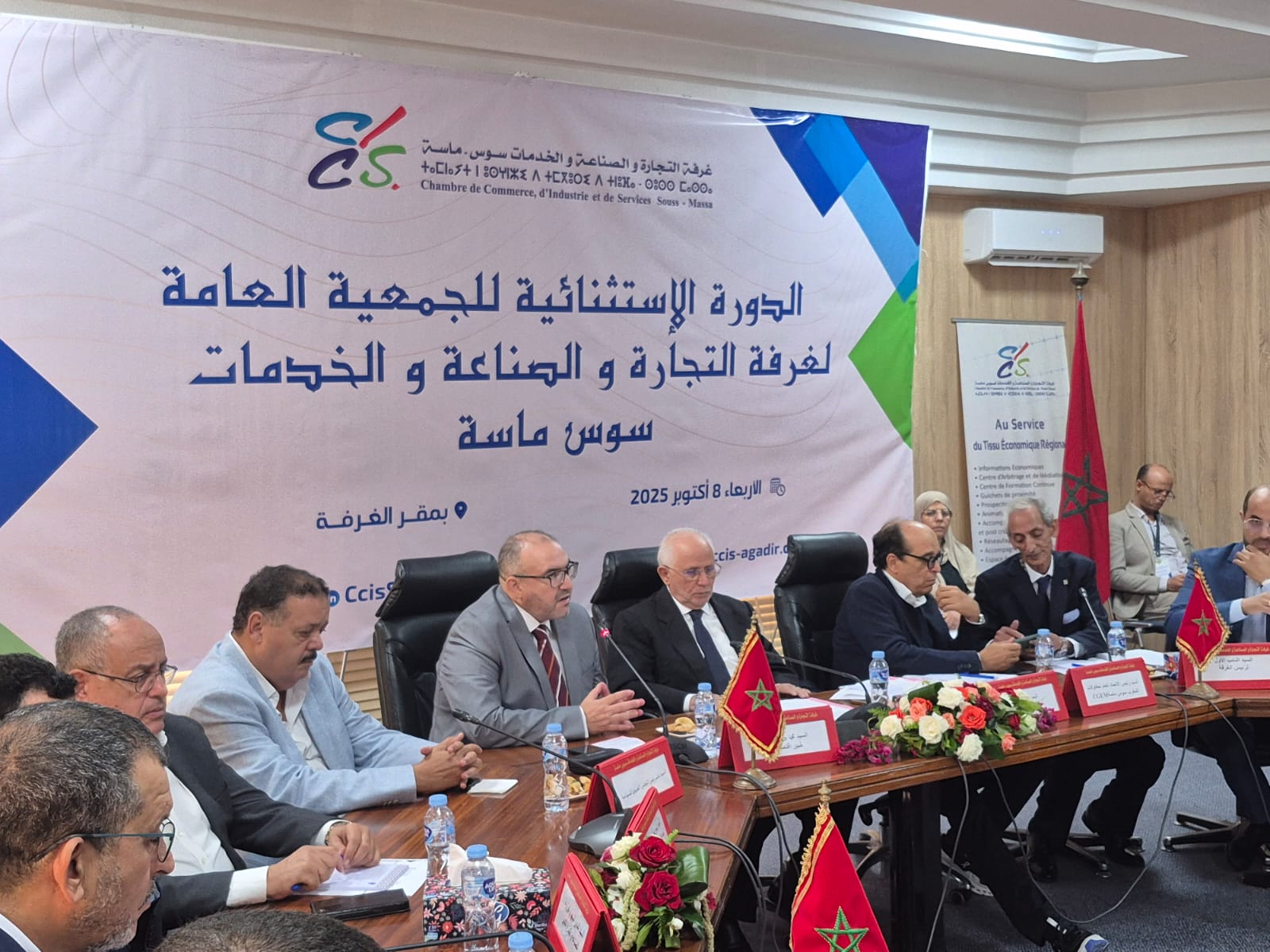
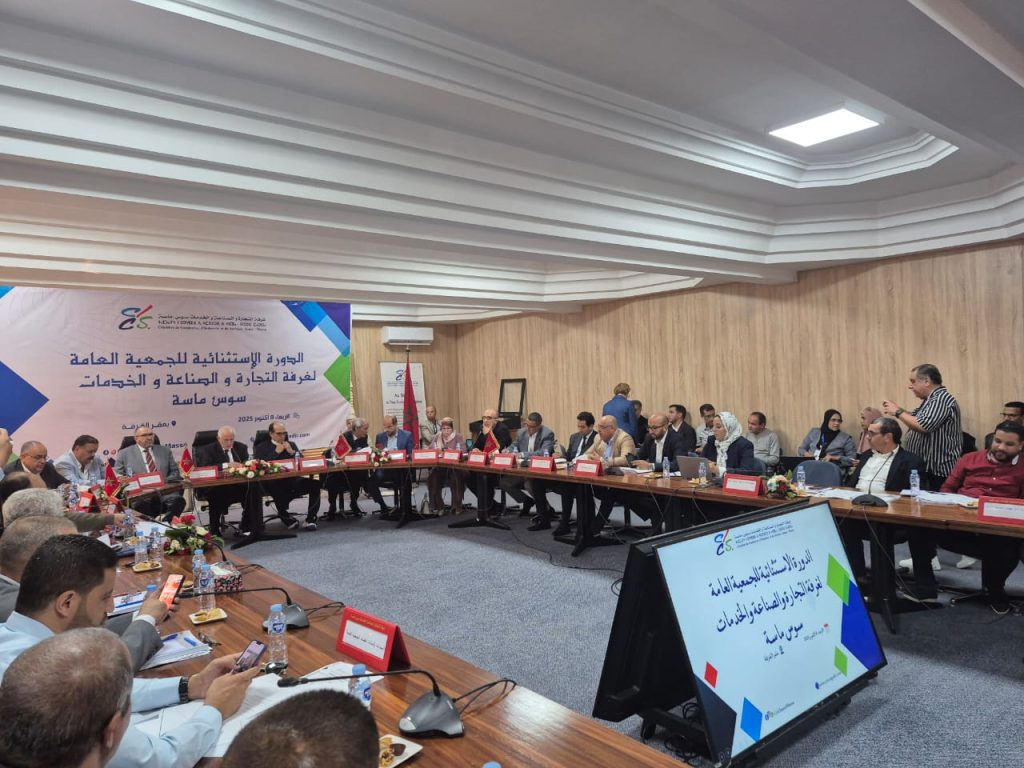
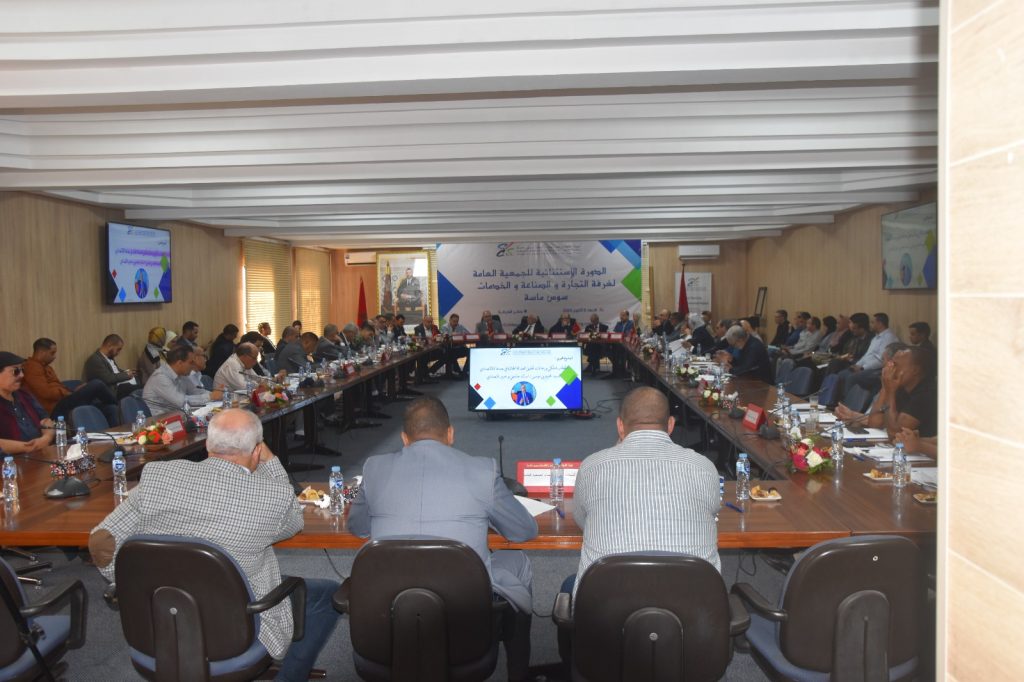
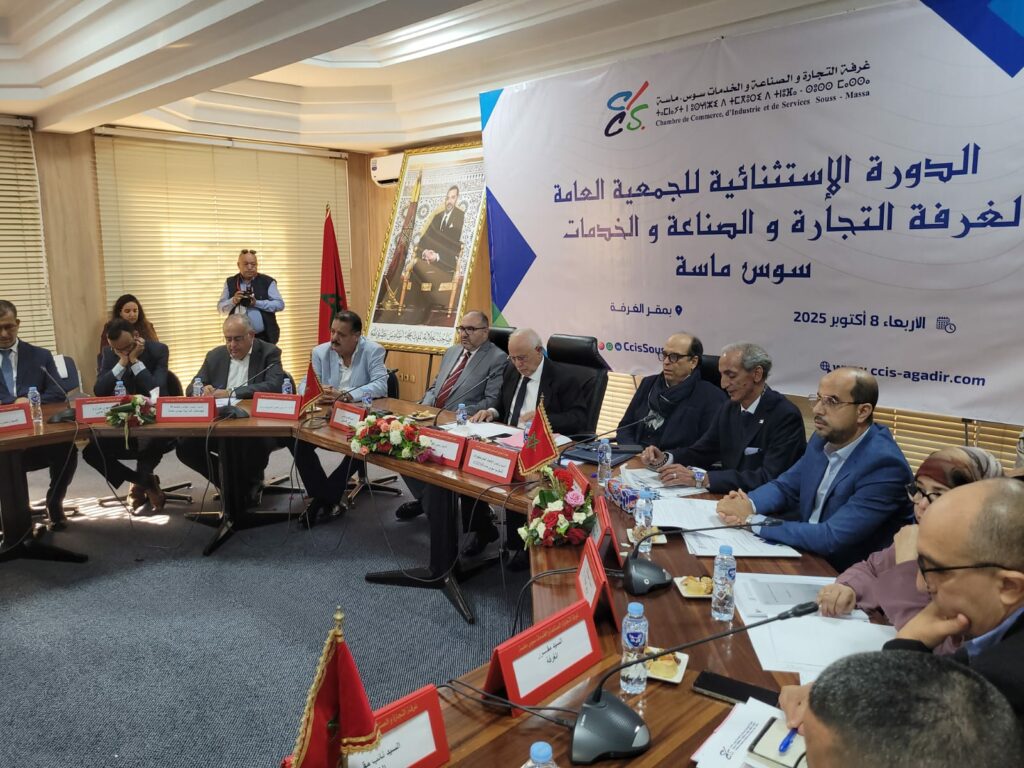
Wednesday, October 8, 2025, at the Chamber's headquarters.
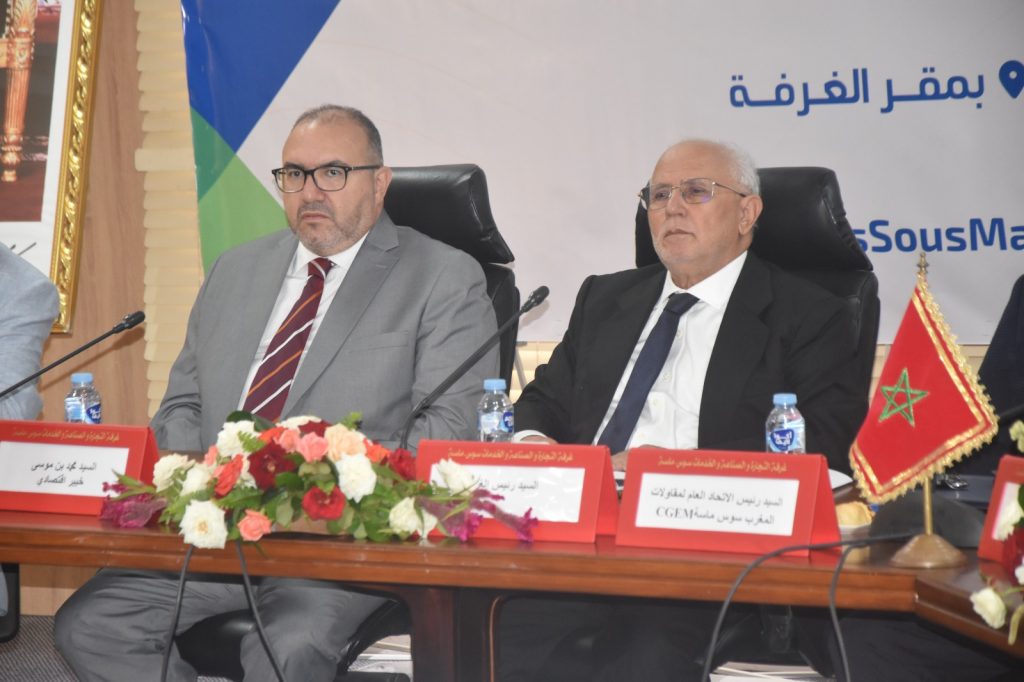
This session was chaired by Mr. Said DOR, President of the Chamber, in the presence of the Chamber's members, representatives of local authorities, business leaders and investors from the region, partner institutions, local authorities, professional associations, and the media.
Those present included:
- Mr. Mohamed Ben Moussa, academic and economic expert;
- The President of the Council of the Community of Communes;
- The President of the General Confederation of Moroccan Enterprises for the Souss-Massa region;
- The Vice-President of the Regional Tourism Council;
- The Vice-President of Ibn Zohr University;
- The Regional Director of the Ministry of Industry and Trade in Agadir.
In his opening address, the President of CCIS Souss-Massa emphasized that the Royal Speech on the occasion of the 2025 Throne Day clearly outlined a new roadmap, calling for moving beyond narrow sectoral approaches and establishing genuine spatial justice ensuring a balanced distribution of opportunities, investments, and wealth, while strengthening trust and equal opportunities among all citizens.
He insisted that achieving this vision is a collective responsibility, requiring investments in infrastructure, the enhancement of human capital, the encouragement of entrepreneurial initiative, as well as the strengthening of sustainable local development.
Addressing the development situation, the President relied on the results of the 2024 General Population and Housing Census, which highlighted positive indicators, notably:
- A decline in the multidimensional poverty rate to 6.8%;
- Morocco's official accession to the ranks of countries with high human development.
However, these achievements are accompanied, in his view, by persistent territorial disparities and challenges in vital sectors such as employment, education, and health, requiring heightened efforts to achieve territorial and economic equity.
He also referred to the recent mobilizations that took place in the region's cities, expressing legitimate social and economic demands. He expressed his understanding of the depth of these requests while condemning the acts of violence that affected public and private property and impacted the economic cycle. He called for the preservation of peace as a civilized choice, praising the efforts of public authorities, security forces, and elected officials in restoring security and ensuring the continuity of economic activities.
He concluded by affirming that the protection of the economy is a shared responsibility, which can only be achieved through constructive dialogue and the rejection of violence, emphasizing that spatial justice is a national choice and an essential condition for stability, the realization of which requires the collective mobilization of all stakeholders.
He also highlighted the central role of chambers of commerce, industry and services in defending the interests of professionals, contributing to the formulation of economic policies, supporting investment and promoting the region.
Highlighting the main presentation of this session, Mr. Mohamed Ben Moussa, economic expert and member of the team responsible for drafting the new development model, delivered a keynote address entitled:
“The Royal Speech and the Challenges of Achieving Spatial Justice in its Economic Dimension”.
He stated that the Royal Speech constitutes a strategic reference for guiding public policies and reinforcing the principles of balanced development between the various regions of the Kingdom.
He specified that spatial justice is an essential condition for achieving comprehensive and sustainable development, particularly in its economic dimension, ensuring the reduction of territorial and social disparities and equality among citizens.
He added that economic growth can only be real and equitable if it includes all regions, especially those suffering from vulnerability or a deficit in infrastructure and investment. Thus, the Royal Speech calls for the adoption of a new generation of territorial development programs based on the enhancement of local specificities, the consolidation of the principles of advanced regionalization, and the strengthening of solidarity and integration mechanisms among territories.
Mr. Ben Moussa insisted on the necessity of involving all economic and institutional actors in the formulation of projects having a concrete impact on the population, notably through:
- Investment in infrastructure;
- Support for small and medium-sized enterprises;
- Encouragement of innovation;
- Job creation at the regional level.
Finally, he expressed regret over the lack of concrete implementation of the recommendations of the new development model, despite the richness of its strategic visions and practical proposals aimed at bringing about a profound transformation in the various economic and social fields of the Kingdom.
In the afternoon, following the approval by the General Assembly of the minutes of the Chamber's ordinary session held on July 3, 2025 in Biougra, the following agreements were adopted after a brief presentation of their content and implementation procedures:
- Adoption of the Chamber's amending budget for the 2025 financial year;
- Adoption of the draft partnership agreement between the Chamber of Commerce, Industry and Services of Souss-Massa and the Regional Tourism Council;
- Adoption of the specific partnership agreement project aimed at creating a modern, eco-friendly taxi fleet in the prefecture of Agadir Ida Outanane.
In conclusion, a message of loyalty and allegiance was read out and addressed to His Majesty the King, may God protect Him.

 English
 French
 Moroccan Arabic